


Celebrating Mid-Autumn Festival in 2026

This year, the Mid-Autumn Festival falls on September 25, 2026. So what is the Mid-Autumn Festival all about, and what is its significance in Chinese culture and history? All the information can be found in the book Celebrating Mid-Autumn Festival, which Eugenia Chu and I co-wrote together. To get a little taste of the book, scroll down for a brief introduction and quick explanations about the festival.
If you already have a copy of the book, you can get a refresher and refer to the pages specified in each section for more information. If you don’t have a copy of our book yet, here’s the link to grab it: https://mybook.to/CMAF (It’s available in e-Book, paperback, or hardcover formats.)
If you are located in Hong Kong, scroll down to the bottom of the post to check out some cool places to visit and fun events that are happening during the festival!

What is the Mid-Autumn Festival?
The Mid-Autumn Festival, also known as the Moon Festival or Mooncake Festival, is one of the most important holidays in Chinese culture, second only to Chinese New Year. It is a time for us to slow down, look up at the bright full moon, and share a moment of togetherness. People celebrate by gathering with family, enjoying mooncakes, and appreciating the beauty of the harvest season under the glowing night sky. This centuries-old tradition reminds us that no matter how far apart we are, the same moon connects us all.
Across China and other parts of Asia, the Mid-Autumn Festival carries deep meaning. It honors the harvest, the moon’s fullness, and family unity. From lighting colorful lanterns to sharing stories of Chang’e, the moon goddess, the festival blends ancient customs with modern celebrations.
History and Folklore
The Mid-Autumn Festival, or Zhōng qiū jié (中秋节) dates back over 3,000 years and traditionally falls on the 15th day of the 8th month of the Chinese lunisolar calendar when the moon is believed to be at its fullest. This is usually in September or early October on our Gregorian calendar.
There are various myths and legends surrounding the Mid-Autumn Festival, but the most well-known is the story of Houyi and Chang’e. In ancient times, it was believed that ten suns circled Earth, and all ten suns suddenly appeared together, setting Earth on fire. Houyi, a brave archer, was tasked to save the Earth by shooting down nine of them. As a reward, he was given an elixir of immortality by the Jade Emperor. His wife, Chang’e, drank the elixir to prevent Houyi’s apprentice from stealing it. Soon after, she flew to the moon and became the Moon Goddess. The moon was especially bright that night. Houyi was heartbroken when he found out what had happened to her, so he placed offerings of her favorite foods under the full moon. This act became a tradition of the Mid-Autumn Festival, as families gather to admire the moon and honor Chang’e.
Another beloved story tells of the Jade Rabbit, a symbol of kindness and sacrifice. The image of the rabbit is often seen in lanterns and mooncake designs.
(To learn more about the history and origin of the festival, including the Tale of the Jade Rabbit, refer to pages 2 to 7 of our book, Celebrating Mid-Autumn Festival.)
Symbolism of the Full Moon
The full moon represents completeness and reunion. Its round shape symbolizes unity, harmony, and the hope that families will stay together even when separated by distance. During the festival, we look up at the bright moon and think of loved ones far away. This shared act links people across generations and places. Families exchange mooncakes, whose round shape mirrors the moon.
Importance of the Lunisolar Calendar
The Mid-Autumn Festival follows the Chinese lunisolar calendar, which is based on the cycles of the moon rather than the sun. The festival always falls on the 15th day of the 8th lunar month, when the moon appears brightest and fullest. Ancient farmers relied on the lunisolar calendar to plan harvests and rituals. The full moon marked a moment to give thanks for abundance and to share blessings.
How to Celebrate
Admiring the Moon
Moon gazing connects both tradition and emotion. The moon is said to be the brightest and roundest of the year, symbolizing unity and completeness. People often gather outdoors to enjoy the view. While admiring the moon, stories, legends, and mooncakes are shared.
Family Reunion Dinner
Family reunion, or tuányuán (团圆), is at the heart of the festival. People come together for a special dinner that symbolizes harmony and gratitude, and even travel long distances to share this meal with their families. Typical dishes include mooncakes, crab, roast pork, whole chicken, duck, lotus roots, pear, taro, and round fruits. Each dish represents blessings for the year ahead and reflects family unity and good fortune. The reunion meal is as important as Thanksgiving dinner is in the West.
(To learn more about the special meanings behind each dish and mooncake varieties, refer to pages 10 to 12 of Celebrating Mid-Autumn Festival.)
Eating Mooncakes
The tradition of eating mooncakes, or yuè bĭng (月饼), began during the Yuan Dynasty, where the mooncakes were used to pass around messages to rebel against the Mongols at the time. Nowadays, families and friends usually share a mooncake on the night of the Mid-Autumn Festival. Their round shape represents reunion and completeness.
Popular fillings include lotus seed paste, red bean, and mixed nuts. Some versions contain salted egg yolks, which symbolize the bright moon. (See page 12 for a full list of varieties, and pages 20 to 23 for some mooncake recipes.)
Lanterns and Lantern Riddles
Lanterns add color and joy to the night. These bright displays symbolize hope and good fortune. Children enjoy making their own colorful lanterns in different shapes and parade them around the neighborhood.
People also enjoy writing and guessing lantern riddles, called dēng mí (灯谜). This tradition is over 1,500 years old. It is still popular today as it is a great way to exercise your brain and bond with family and friends.
(See pages 24 to 29 for instructions to make your own lanterns and writing lantern riddles.)
Places to Visit
If you’re not sure what to do or haven’t made any plans yet, here’s a festive guide to the best places to visit in Hong Kong for Mid-Autumn Festival 2026! Whether you’re chasing lanterns, mooncakes, or cultural performances, these spots promise a magical and memorable celebration.
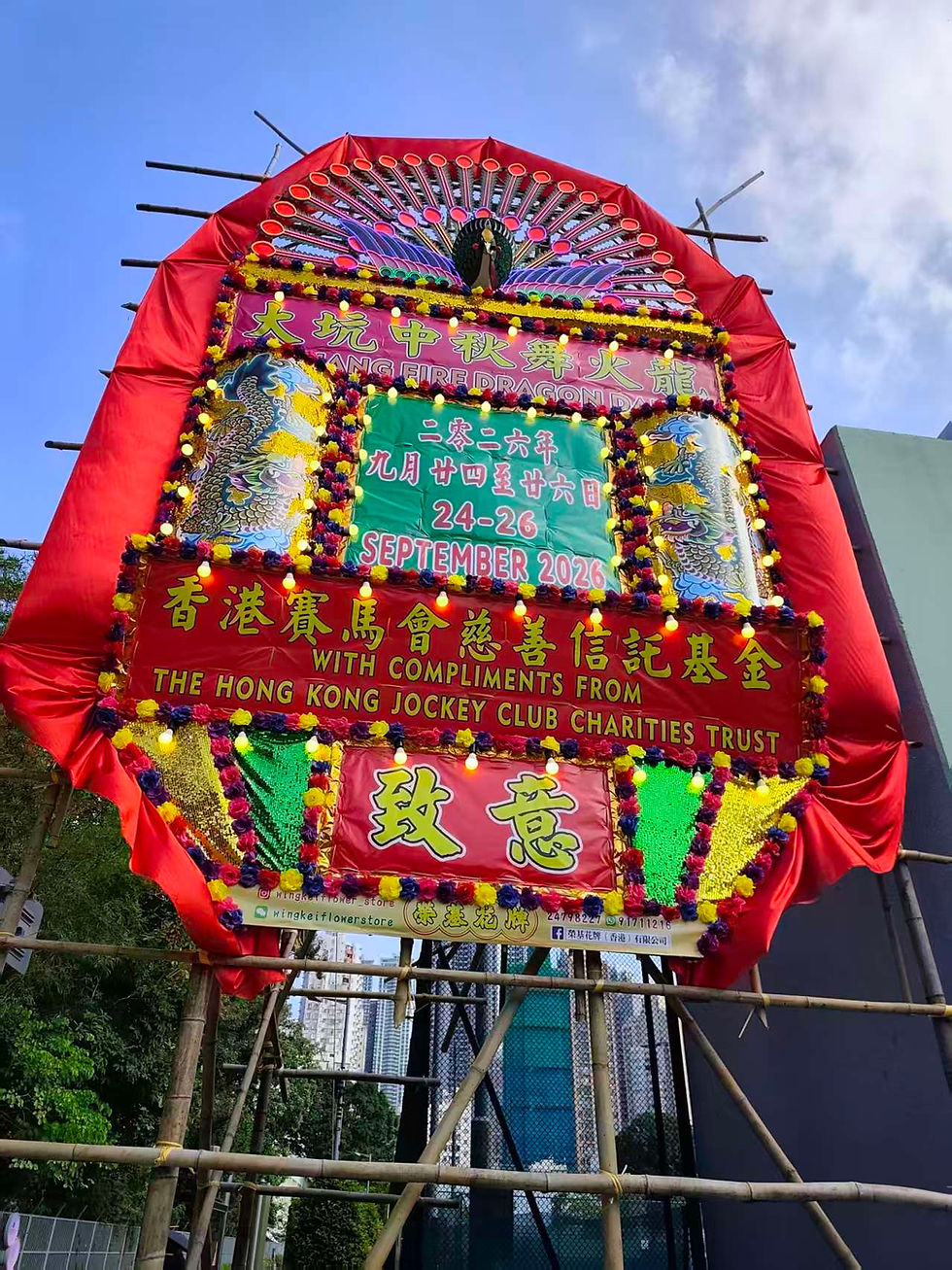
1. Tai Hang Fire Dragon Dance
Dates: September 24–26, 2026 (8:15 p.m. to 10:30 p.m.)
Location: Tai Hang, Causeway Bay to Tung Lo Wan Road
A 67-meter-long dragon made with over 12,000 incense sticks is paraded by 300 performers in turns, ranging from 16 to 80 years old. This tradition spans over a century and is inscribed on the list of China’s Intangible Cultural Heritage. This spectacle is not to be missed if you are in Hong Kong!
I just walked by this sign on my way to tutoring yesterday as well!
2. Victoria Park Lantern Carnival
Dates: September 17–27, 2026
Location: Victoria Park Soccer Pitches 1-6, Causeway Bay
This is the largest event of all, featuring massive traditional lantern displays, Fire Dragon Dance, and live stage performances and demonstrations—all completely free! This year’s theme is ‘A Delightful Journey through the Lantern Garden’ which focuses on Chinese culture and local flavors, including Hong Kong food such as dim sum, pineapple bun, and more. There are also lanterns shaped as pandas, galloping horses, blooming flowers, and heart-shaped light plaques. Don’t miss the Carnival Night or Gala Night, which features live performances, on September 25 (7:30 p.m. to 10:00 p.m.)
I also walked past Victoria Park after my lesson and saw the set-up so far. I can’t wait to see the rest!
3. Lee Tung Avenue – Moon Fest Lumiere
Dates: September 3-October 19, 2026
Location: Lee Tung Avenue, Wan Chai
Lee Tung Avenue is decorated with over 800 traditional red Chinese lanterns hanging over the pedestrian walkway. The lanterns are switched on from 5:00 p.m. each day. Another highlight is the LED Fire Dragon Dance (18 meters long), exclusive to Lee Tung Avenue. There will also be lion dance and drumming performances on the evening of September 25 from 8:30 p.m. to 9:15 p.m. Don’t miss it!
4. Tsim Sha Tsui Mid-Autumn Thematic Lantern Display
Date: September 17-October 11, 2026 (6:30 p.m. to 11:00 p.m.)
Location: Clock Tower in Tsim Sha Tsui
This is one of the key events of the Mid-Autumn Festival celebration. This year’s theme is ‘Moonlit Bunny Crew’, featuring a group of adorable bunnies shooting a documentary in front of a miniature Hong Kong cityscape, designed by a local creative team STICKYLINE.
5. Tai O Night Lantern Illumination & Night Boat Parade
Dates: TBC
Location: Tai O Fishing Village
Featuring traditional paper lanterns, as well as lanterns shaped like a dragon, cat, rabbit, moon, and giant koi fish, illuminating the fishing village. Visitors can also enjoy 40-minute ride on a traditional sampan to admire the illuminated lanterns under the moonlit sky.
6. Sik Sik Yuen Lantern Carnival at Wong Tai Sin Temple
Dates: September 17-October 4, 2026 (6:00 p.m. to 9:00 p.m. weekdays; 10:00 p.m. weekends; 11:00 p.m. Mid-Autumn Day)
Location: Sik Sik Yuen Wong Tai Sin Temple
Visitors can admire spectacular lantern displays and play some interactive cultural games at various booths, as well as lantern riddles around the temple grounds. This year, there is an exclusive lantern featuring a Hong Kong astronaut traveling into space. The temple will also provide telescopes for visitors to use to gaze at the sky and moon.
If you prefer to have a quiet celebration at home with the family instead, you can download some fun Word Puzzles here to do with the kids. And for some engaging discussions, check out the Discussion Guide!
My students’ parent has already gifted me two boxes of mooncakes and a box of peaches, with a very sweet card. I’m looking forward to cutting into those mooncakes next week!
How will you be spending the festival weekend? Let us know in the comments!
I’ll share a few other books about the Mid-Autumn Festival in my next post, so stay tuned!
Happy Mid-Autumn Festival! 中秋节快乐!
(Source: https://www.nextstophongkong.com/hong-kong-mid-autumn-festival-celebrations/)
*This post contains affiliate links.


Comments